Satellite Independence: Ukraine’s Search for Connectivity Alternatives
Reliance on commercial satellite services has prompted Ukrainian and European officials to accelerate the development of independent communication infrastructure.
By Mykola Bondarenko ·
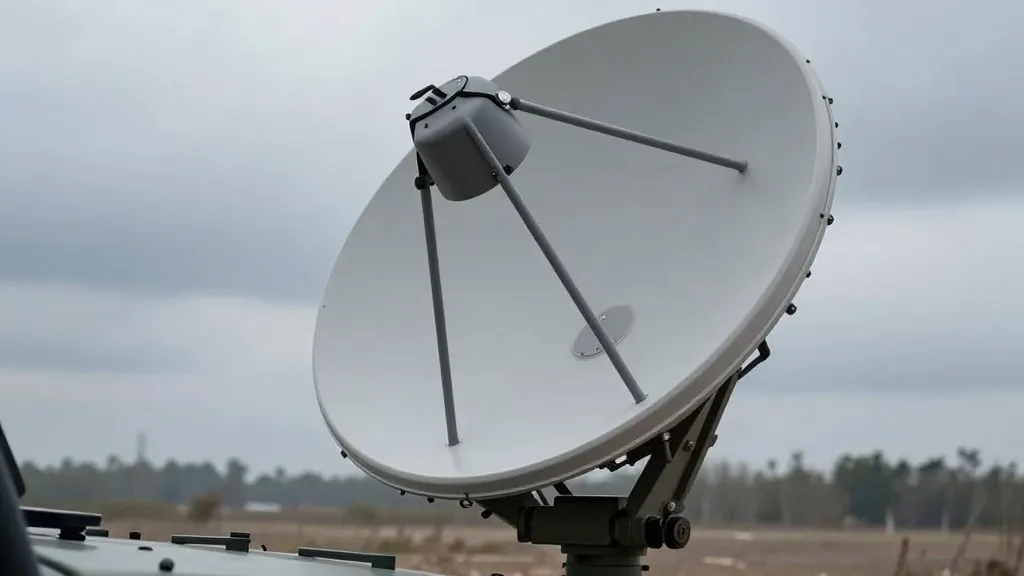
Elon Musk’s Starlink satellite network has served as a critical communication backbone for Ukraine during its resistance to Russia’s full-scale invasion. However, recent disruptions in service, driven by the company's evolving political landscape and the owner’s public statements, have forced a reevaluation of this dependency. As the reliability of the system becomes a point of contention, both Ukrainian and European leaders are now urgently assessing how to maintain vital digital links without relying solely on this single commercial provider.
For several years, Starlink has been the primary enabler of high-speed internet and data transmission across the conflict zone. Because the service operates through relatively compact terminals, it has been easy to deploy on both civilian infrastructure and military vehicles. This accessibility allowed the Ukrainian military to expand its operational capabilities significantly, particularly in the realm of remote warfare. The service provided the stable data streams necessary to guide drones and coordinate air defense systems against incoming Russian attacks, effectively linking the front lines with command centers through a private commercial network.
Despite its dominance, the system is not without technical limitations. The head of hardware research and development at the Ukrainian defense firm BlueBird Tech noted that Starlink currently stands out as having the best combination of cost, availability, and ease of use, with virtually no direct competitors in that specific market niche. However, the representative emphasized that a major practical constraint remains the physical positioning of the antenna. Users must ensure the hardware is correctly oriented to maintain a line-of-sight connection with the satellites, a requirement that can be challenging in the dense, often obstructed environments of active combat zones.
The financial and logistical support for this infrastructure has been substantial. The United States government, along with European nations such as Poland and Germany, have funded the procurement of tens of thousands of commercial Starlink terminals. These nations have not only purchased the hardware but also covered the ongoing subscription fees, ensuring that the service remains active for Ukrainian users. This collaborative funding model highlights the extent to which the conflict has become intertwined with commercial space technology, turning a private subscription service into a strategic military asset.
Beyond the standard commercial terminals, Ukraine has also gained access to a more specialized version of the system. The US government provided the Ukrainian military with access to Starshield, a military-grade iteration of the satellite network. This tier of service offers enhanced capabilities that are better suited for defense applications. According to the BlueBird Tech representative, Ukrainian defense companies are currently utilizing this access to test their own technologies in cooperation with the military, aiming to integrate these robust communication layers into their broader defense strategies.
The current situation raises significant questions about the future of satellite communication in military contexts. While Starlink has proven to be a powerful tool for maintaining connectivity in the face of aggression, its reliance on a single private entity introduces new variables into the equation. The recent service disruptions have underscored the need for diversification, prompting a shift in focus toward building independent or semi-independent communication capabilities. This transition represents a broader strategic adjustment, as allies work to ensure that the digital lifelines supporting the conflict are resilient against both technical failures and political shifts.
As the war continues, the balance between leveraging existing commercial infrastructure and developing sovereign alternatives will likely define the next phase of Ukrainian defense strategy. The integration of Starshield and the testing of new hardware by domestic firms suggest a move toward a more self-sufficient technological ecosystem. Ultimately, the goal is to reduce the vulnerability associated with depending on a single global provider, ensuring that communication capabilities remain robust and responsive regardless of external commercial or political decisions.
Source: Ars Technica